Stint: A Bold Display Font That Makes Your Handmade Goods Shine
I was halfway through designing a new batch of soy candle labels—amber glass jars, minimalist kraft paper tags, soft linen twine—when I paused. The clean sans serif I’d been using felt… safe. Too safe. It didn’t whisper “hand-poured,” “small-batch,” or “thoughtfully scented.” It just said “text.” So I opened my font library, scrolled past the workhorses, and landed on Stint. One preview, and I knew: this wasn’t just another display font. It was the kind of typeface that makes people pause mid-scroll on Etsy, tilt their head at a boutique shelf, or linger over a wedding invitation before even reading the words.
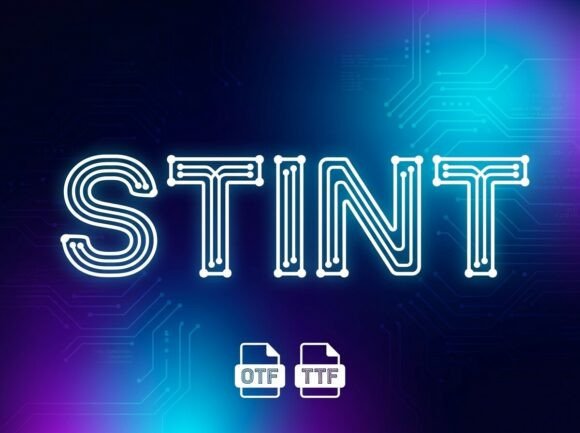
Stint is a decorative display font with unmistakable presence—confident, artistic, and quietly expressive. Its letterforms carry subtle irregularities, gentle tapering strokes, and a hand-informed rhythm that feels intentional, not accidental. It’s not fussy or overly ornate; instead, it balances boldness with warmth. Think of it as the typography equivalent of a perfectly imperfect ceramic mug: substantial, inviting, and full of character. It leans modern but nods to vintage signage and artisanal letterpress—ideal for makers who value authenticity over polish.
I first tested Stint on a set of greeting cards for a local florist collaboration. Using it for the card title (“Wild & Rooted”) gave instant visual hierarchy—no extra graphics needed. Then I layered it over a simple sans serif body font (a clean, neutral geometric sans) for contrast and readability. The pairing worked beautifully: Stint commanded attention, while the supporting font kept the message clear and grounded. That same rhythm carried over when I adapted the design for digital printables—a set of seasonal planner pages where “Autumn Gatherings” became the hero header, and the rest of the layout stayed calm and functional.
For physical products, Stint shines brightest where impact matters most: candle labels, boutique tags, wedding welcome boards, farmhouse-style wall signs, and limited-edition tote bags. Its strong x-height and open counters hold up well when printed small—say, on 1.5-inch sticker labels for mini soap bars or jar seals. When cut with a Cricut or Silhouette, it flows cleanly through the machine, especially at sizes above 12pt. For smaller applications like gift tag text or tiny packaging accents, I stick to short phrases (“Handmade,” “Small Batch,” “Est. 2023”)—Stint isn’t built for paragraphs, and it shouldn’t be. It’s a display font, designed to spotlight, not explain.
Seasonal work is where Stint really sings. Last December, I used it for holiday mug designs—“Cozy Hours” arched across a ceramic mockup—and the font’s slight upward lift in the curves felt joyful without being cutesy. For spring, I paired it with a delicate script font for a botanical-themed invitation suite: Stint handled the couple’s names and event title, while the script added softness for details like “Saturday, April 12th.” The contrast elevated the whole suite—it felt curated, not cluttered.
Readability is key, especially for product labels meant to be scanned quickly on shelves or online listings. Stint remains legible at medium sizes (16–24pt) on white or light kraft backgrounds. On dark surfaces—like navy cotton tote bags or charcoal cardstock—I always test a high-contrast version (white or cream ink) and avoid ultra-thin weights if those are included. Speaking of weights: before downloading or purchasing, always check what’s included—many display fonts like Stint offer only a single weight, sometimes with stylistic alternates or ligatures. Those extras add nuance: swapping an “A” or “R” for a more calligraphic alternate can refine a logo lockup or invitation monogram.
Licensing is non-negotiable. As a maker selling physical goods or digital downloads, I double-check that Stint includes commercial use rights—not just for personal projects or social posts, but for items I’ll list on Etsy, sell at craft fairs, or license in Canva templates. Reputable font vendors clearly state whether the license covers merchandise, printables, SVG files, or web use. If you’re bundling Stint into a printable planner or wedding suite, confirm multilingual support too—especially if you plan to include common accents or diacritics for names or locations.
Font pairing is where Stint becomes truly versatile. With a crisp sans serif (think Montserrat, Inter, or Poppins), it grounds branding systems—perfect for shop banners, packaging headers, and Instagram story text overlays. Against a gentle serif (like Playfair Display or Lora), it adds editorial sophistication to invitation suites or boutique packaging. And when layered with a relaxed handwritten font—even sparingly—it creates tactile, human energy, ideal for farmers’ market signage or handmade soap labels.
I’ve also used Stint in unexpected places: as a watermark on digital wall art previews (its bold shape reads clearly at low opacity), as a foil-stamped accent on wedding favor boxes, and even as a subtle texture overlay on fabric-print mockups for custom tea towels. Each time, it reinforced the feeling I wanted to convey—not just “this is handmade,” but “this is made with care, intention, and a little bit of soul.”
What sets Stint apart isn’t just how it looks—but how it behaves in real making. It doesn’t demand attention; it earns it. It doesn’t shout over your product—it lifts it. Whether you’re printing 50 candle labels at home or prepping a bundle of digital greeting card templates, Stint gives your work a signature tone: confident, creative, and unmistakably yours.
- Best for: Titles, names, short phrases, packaging headers, shop signage, digital printables, and any place you want immediate visual impact
- Avoid for: Long paragraphs, fine print, tiny embroidery text, or dense product descriptions
- Pro tip: Always preview Stint in your final format—on screen, in mockup software, and as a printed proof—before mass production
- Pair it with: A neutral sans serif for balance, a warm serif for elegance, or a light script for contrast
- Before buying: Confirm file formats (OTF/TTF/SVG), included alternates, commercial license scope, and language support